
Temple Blog
Stay connected with news, articles, and updates from our community.
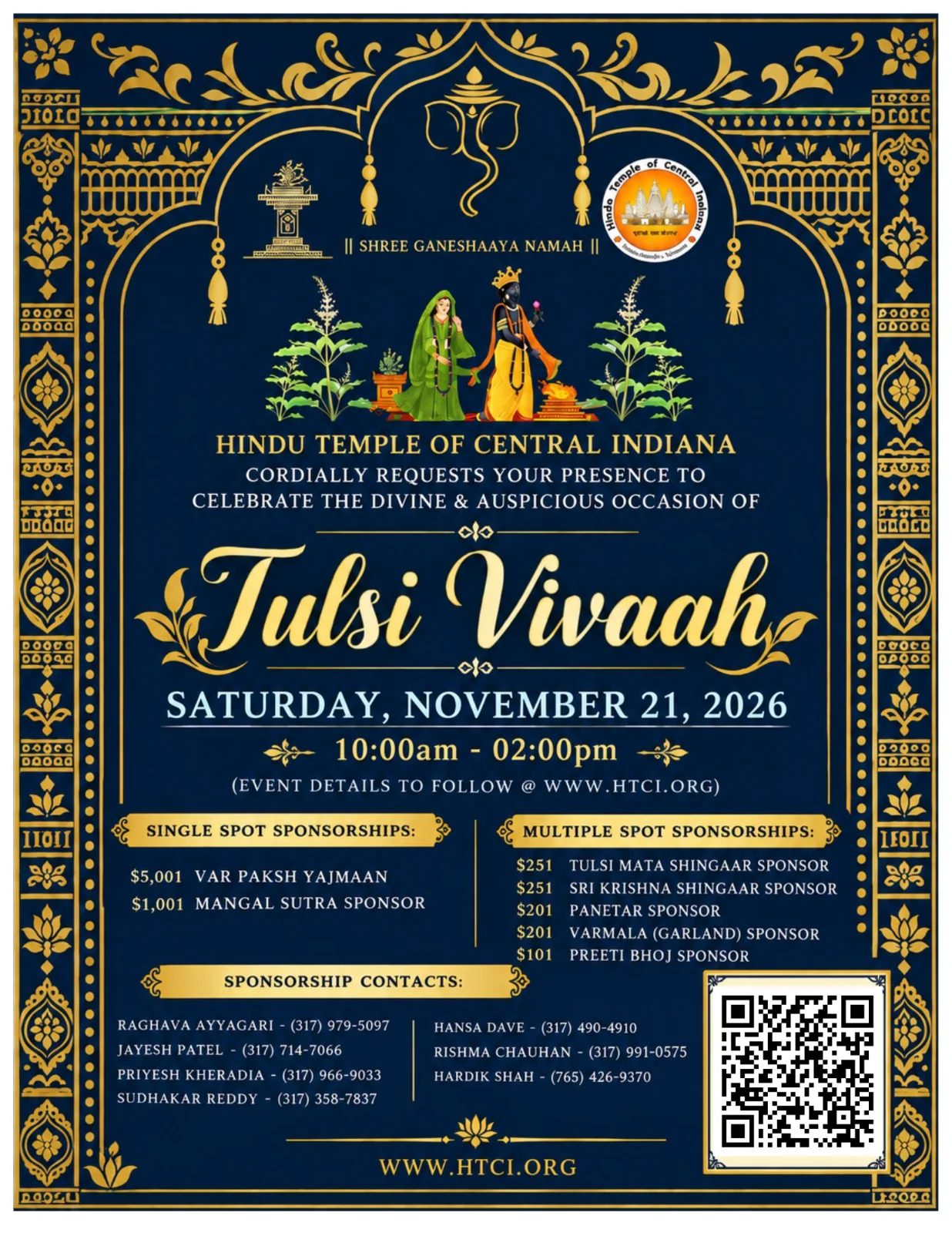
Upcoming Event: Tulsi Vivaah
September 30, 2026
Join us for Tulsi Vivaah! Mark your calendars. More details to follow.
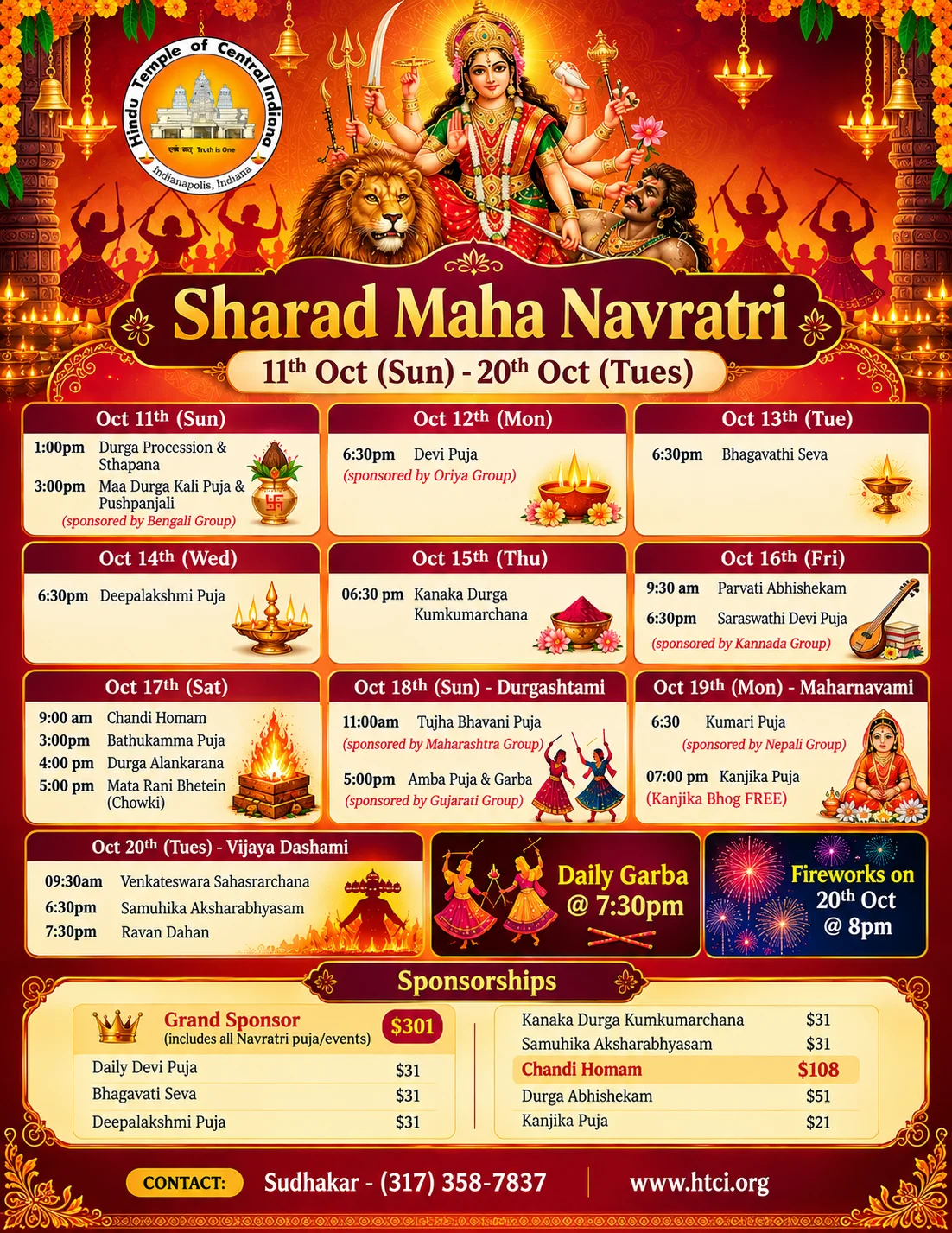
Upcoming Event: Sharad Maha Navratri
September 30, 2026
Join us for Sharad Maha Navratri! Mark your calendars. More details to follow.
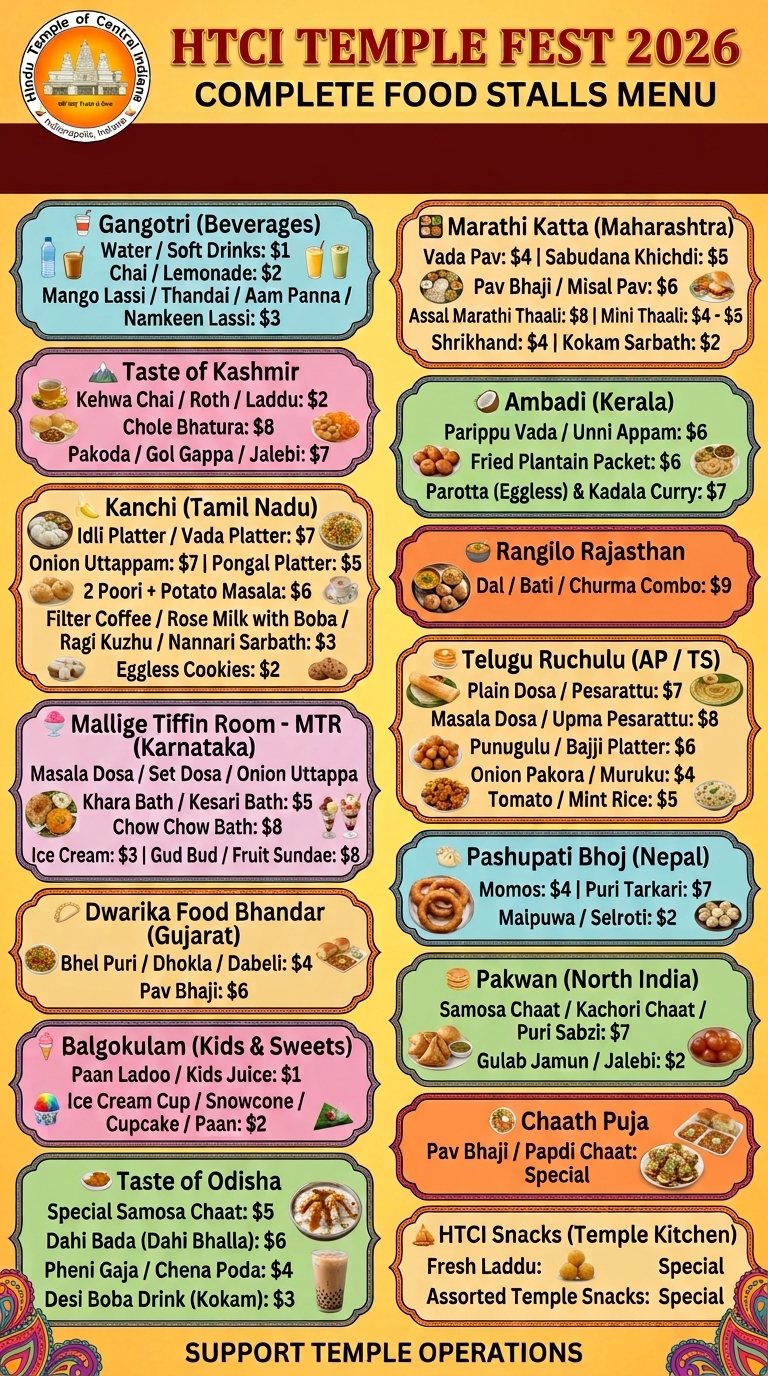
Temple Fest Food Menu
September 12, 2026
🛕 HTCI TEMPLE FEST 2026 — COMPLETE FOOD STALLS MENU🥤 Gangotri (Beverages)Water / Soft Drinks: $1Chai / Lemonade: $2Mango Lassi / Thandai / Aam Panna / Namkeen Lassi: $3🏔️ Taste of KashmirKehwa Chai / Roth / Laddu: $2Chole Bhatura: $8Pakoda / Gol Gappa / Jalebi: $7🍌 Kanchi (Tamil Nadu)Idli Platter / Vada Platter: $7Onion Uttappam: $7 | Pongal Platter: $52 Poori + Potato Masala: $6Filter Coffee / Rose Milk with Boba / Ragi Kuzhu / Nannari Sarbath: $3Eggless Cookies: $2🍧 Mallige Tiffin Room - MTR (Karnataka)Masala Dosa / Set Dosa / Onion Uttappa: $8Khara Bath / Kesari Bath: $5 | Chow Chow Bath: $8Ice Cream: $3 | Gud Bud / Fruit Sundae: $8🥟 Dwarika Food Bhandar (Gujarat)Bhel Puri / Dhokla / Dabeli: $4Pav Bhaji: $6🍦 Balgokulam (Kids & Sweets)Paan Ladoo / Kids Juice: $1Ice Cream Cup / Snowcone / Cupcake / Paan: $2🍛 Taste of OdishaSpecial Samosa Chaat: $5Dahi Bada (Dahi Bhalla): $6Pheni Gaja / Chena Poda: $4Desi Boba Drink (Kokam): $3🍱 Marathi Katta (Maharashtra)Vada Pav: $4 | Sabudana Khichdi: $5Pav Bhaji / Misal Pav: $6Assal Marathi Thaali: $8 | Mini Thaali: $4 - $5Shrikhand: $4 | Kokam Sarbath: $2🥥 Ambadi (Kerala)Parippu Vada / Unni Appam: $6Fried Plantain Packet: $6Parotta (Eggless) & Kadala Curry: $7🍲 Rangilo RajasthanDal / Bati / Churma Combo: $9🥞 Telugu Ruchulu (AP / TS)Plain Dosa / Pesarattu: $7Masala Dosa / Upma Pesarattu: $8Punugulu / Bajji Platter: $6Onion Pakora / Muruku: $4 | Tomato / Mint Rice: $5🥟 Pashupati Bhoj (Nepal)Momos: $4 | Puri Tarkari: $7 | Malpuwa / Selroti: $2🫓 Pakwan (North India)Samosa Chaat / Kachori Chaat / Puri Sabzi: $7Gulab Jamun / Jalebi: $2🧆 Chaath PujaPav Bhaji / Papdi Chaat: Special🛕 HTCI Snacks (Temple Kitchen)Fresh Laddu: SpecialAssorted Temple Snacks: Special

Upcoming Event: GRAND GARBA
August 28, 2026
Garba is a vibrant traditional folk dance celebrated during the nine nights of Navaratri, honoring the divine feminine energy of Goddess Durga. Dancers move gracefully in rhythmic circles to lively music, colorful attire, and energetic beats, symbolizing unity, devotion, and the joyous celebration of life. Join us for an unforgettable evening filled with authentic Garba, music, dance, colorful traditions, and festive community spirit.Vendor booth available : One day: $250 & Two day: $400
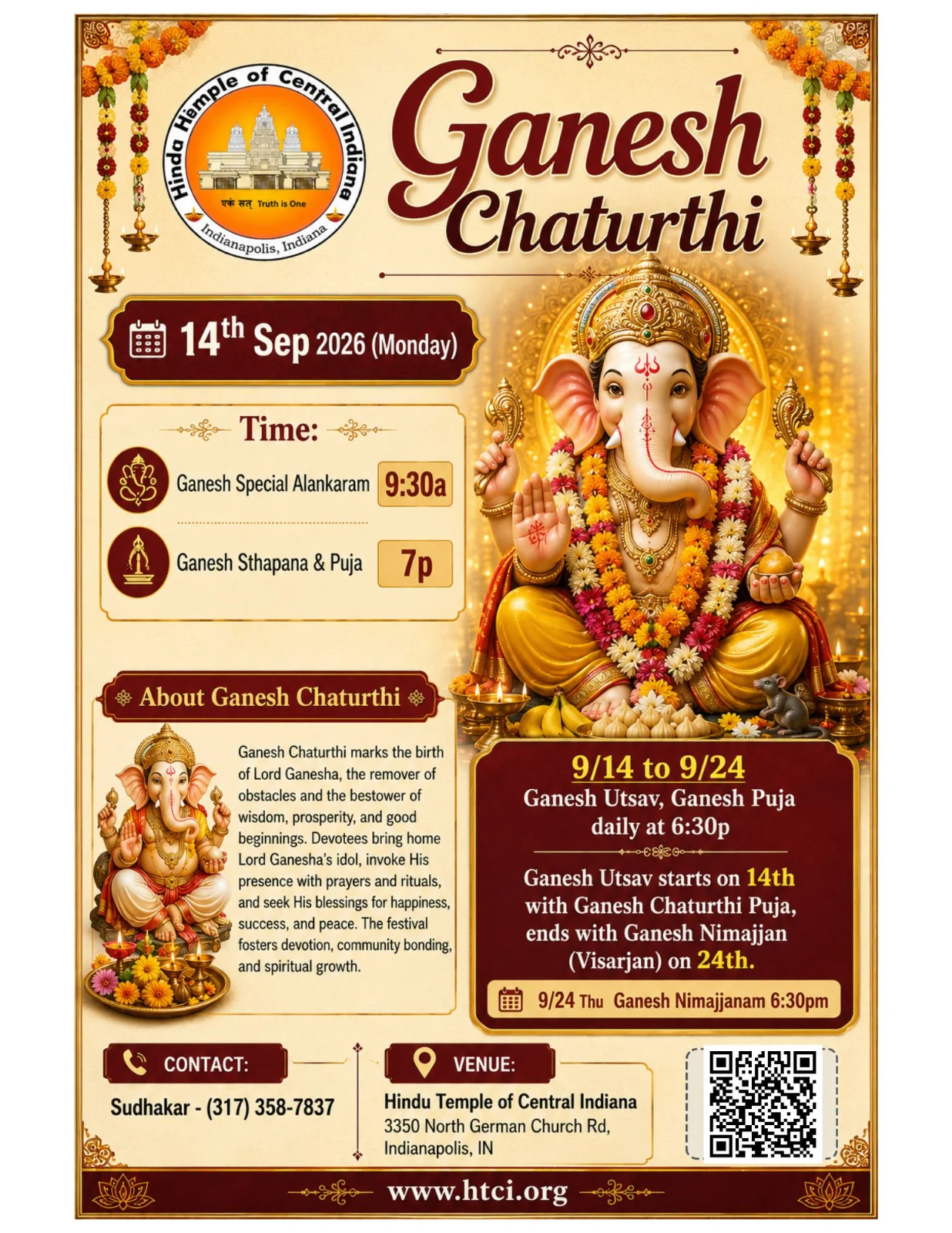
Upcoming Event: GANESH CHATURTHI
August 28, 2026
Ganesh Chaturthi marks the birth of Lord Ganesha, the remover of obstacles and the bestower of wisdom, prosperity, and good beginnings. Devotees bring home Lord Ganesha’s idol, invoke His presence with prayers and rituals, and seek His blessings for happiness, success, and peace. The festival fosters devotion, community bonding, and spiritual growth.PUJA SPONSORSHIPS --> https://myapp.htci.org/serviceopen?g=110&dt=2026-09-14ABHISHEKAM SPONSORSHIPS --> https://myapp.htci.org/serviceopen?g=18&dt=2026-09-14
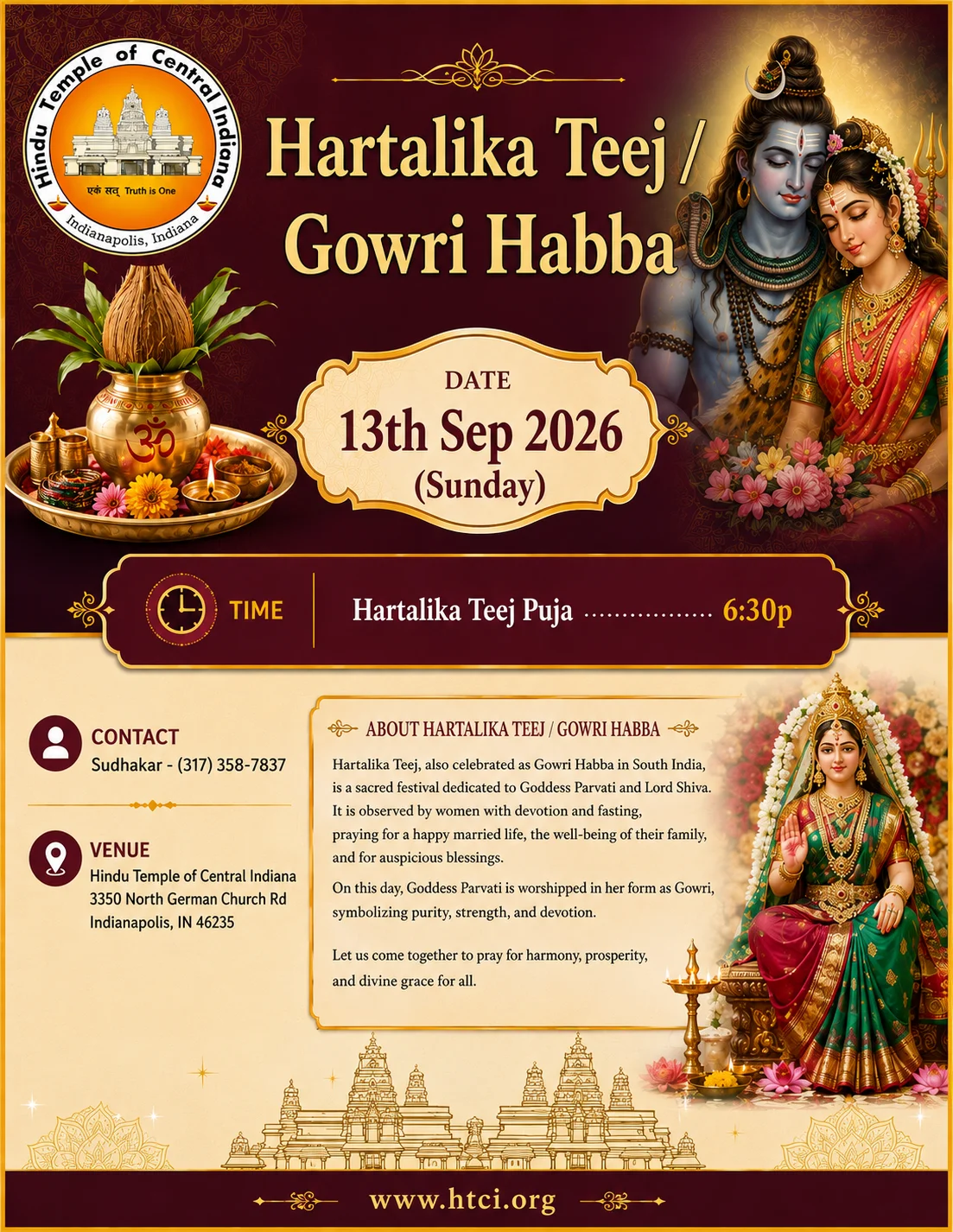
Upcoming Event: HARTALIKA TEEJ / GOWRI HABBA
August 28, 2026
Hartalika Teej, also celebrated as Gowri Habba in South India, is a sacred festival dedicated to Goddess Parvati and Lord Shiva. It is observed by women with devotion and fasting, praying for a happy married life, the well-being of their family, and for auspicious blessings.On this day, Goddess Parvati is worshipped in her form as Gowri, symbolizing purity, strength, and devotion.Let us come together to pray for harmony, prosperity, and divine grace for all.PUJA SPONSORSHIPS --> https://myapp.htci.org/serviceopen?g=121&dt=2026-09-13
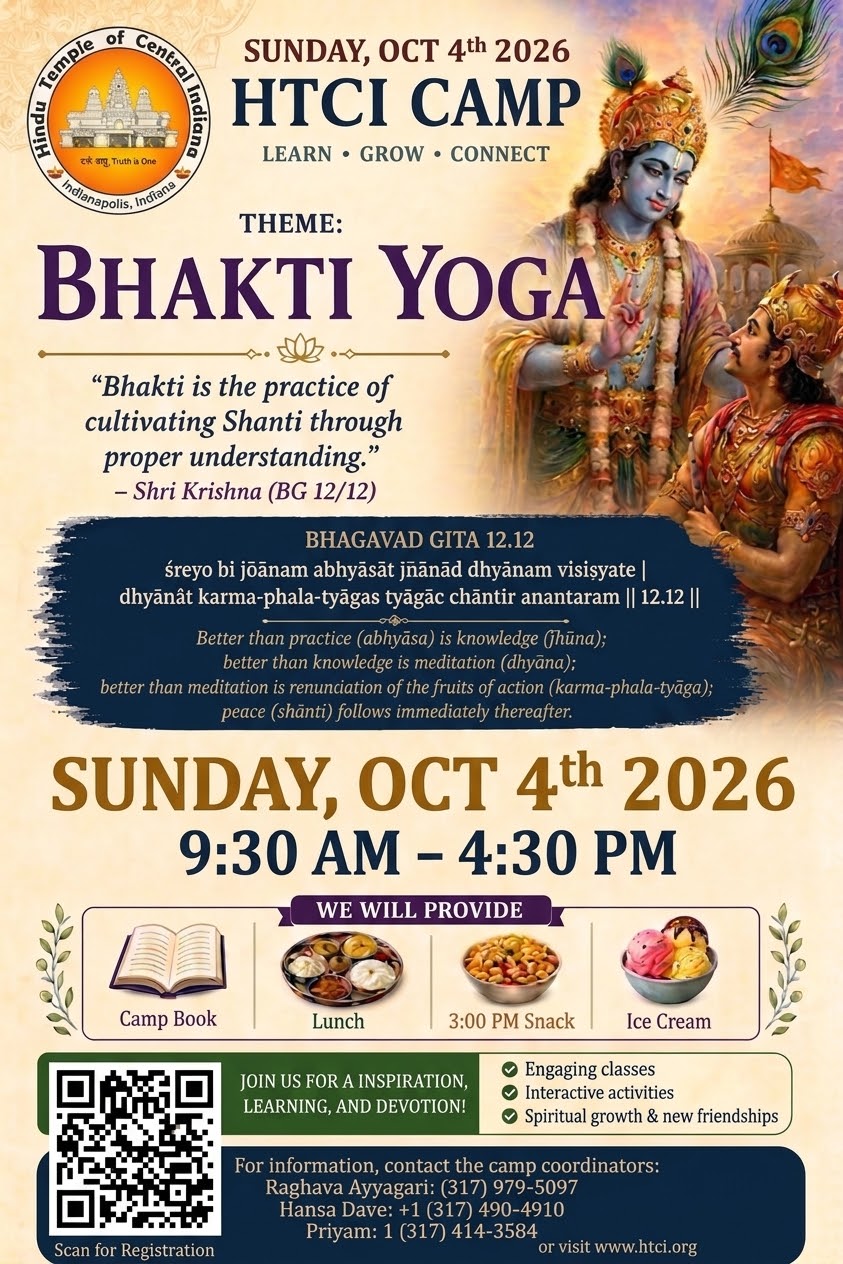
Upcoming Event: HTCI Camp
August 24, 2026
Organization and Event TitleHindu Temple of Central Indiana (Indianapolis, Indiana)HTCI CAMPLEARN • GROW • CONNECTTHEME: BHAKTI YOGAFeatured Quotes and Scripture"Bhakti is the practice of cultivating Shanti through proper understanding." – Shri Krishna (BG 12/12)BHAGAVAD GITA 12.12śreyo hi jñānam abhyāsāt jñānād dhyānam visiṣyate | dhyānāt karma-phala-tyāgas tyāgāc chāntir anantaram || 12.12 ||Better than practice (abhyāsa) is knowledge (jñāna); better than knowledge is meditation (dhyāna); better than meditation is renunciation of the fruits of action (karma-phala-tyāga); peace (shānti) follows immediately thereafter.Date and TimeSunday, Oct 4th 20269:30 AM – 4:30 PMWe Will Provide* Camp Book* Lunch* 3:00 PM Snack* Ice CreamKey HighlightsJOIN US FOR INSPIRATION, LEARNING, AND DEVOTION!* Engaging classes* Interactive activities* Spiritual growth & new friendshipsCamp Coordinators:* Raghava Ayyagari: (317) 979-5097* Hansa Dave: +1 (317) 490-4910* Priyam: 1 (317) 414-3584
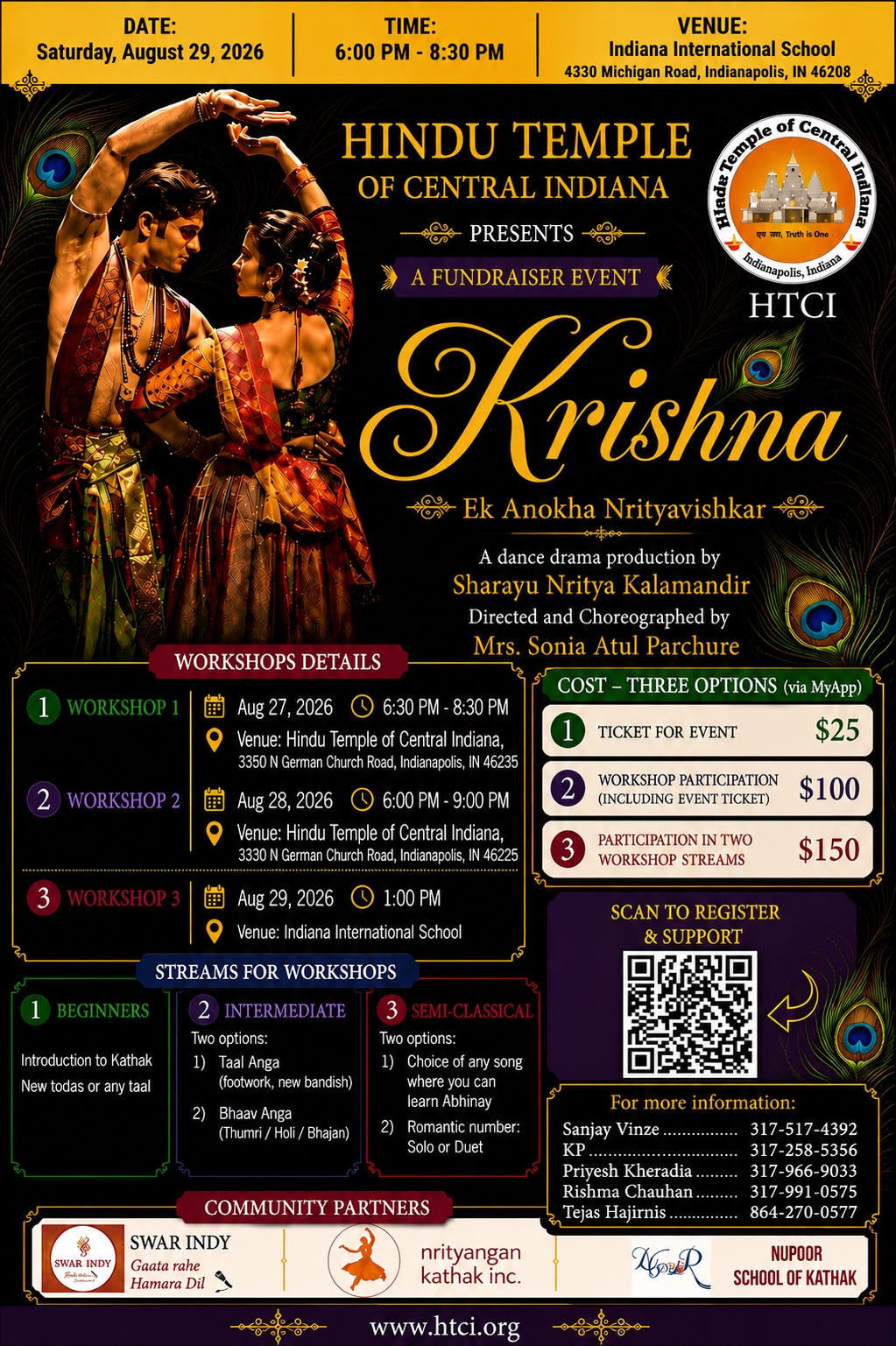
Upcoming Event: KRISHNA - EK ANOKHA NRIYAVISHKAR
August 7, 2026
KRISHNA - EK ANOKHA NRIYAVISHKAR(A Fundraiser event)29th August 2026 | Saturday | 6:00pm - 8:30pm🌸✨ The Hindu Temple of Central Indiana ✨🌸warmly invites you to its special fundraiser presentation:Krishna – Ek Anokha NrityavishkarA dance drama by Sharayu Nritya KalamandirPresented in collaboration with our community partners Swar Indy | Nrityangan Kathak Inc. | Nupoor School of KathakLink: https://myapp.htci.org/serviceopen?g=138&dt=2026-09-29This is more than just a one-of-a-kind dance drama depicting the timeless life and leelas of Lord Krishna 🦚🙏It is an opportunity to experience, learn, and be inspired through the beauty of kathakIn addition to the spectacular performance, workshop participants can choose from three engaging streams designed for Beginners, Intermediate dancers, and those who wish to explore the expressive art of Kathak. Whether you’re taking your very first dance steps, refining your Kathak technique, discovering the beauty of storytelling through dance, or learning choreography to a favorite romantic song, there is something for everyone.Join us in celebrating the spirit of Krishna through the universal language of dance while supporting HTCI’s mission to serve our community. 🌺📞 For more information:Sanjay Vinze 3175174392KP 3172585356Priyesh Kheradia 3179669033Rishma Chauhan 3179910575Tejas Hajirnis 8642700571
Temple Guidelines
June 21, 2026
Dear Devotees, Patrons, and Visitors, We are delighted to welcome you to our Hindu Temple. To ensure a safe, respectful, and meaningful experience for you and your family, please review the following important Temple policy, safety and risk-awareness guidelines. Voluntary Participation Participation in Temple pujas, events and other activities is voluntary. Please take part only in activities appropriate for your health, age, and physical condition. If you or a family member is unwell or unable to participate safely, please refrain from participating. General Event Risks As with any public gathering, attendance involves inherent risks. These include, but are not limited to, illness, slips and falls, crowd dynamics, adverse weather, traffic or parking accidents, and unforeseen emergencies such as natural or man-made disasters. Individuals are encouraged to exercise good judgment and take reasonable care for their own safety and that of their families. Minors, Elders, and Family MembersParents, guardians, and family members are responsible for supervising minors, elders, and others in their care during the convention. Please ensure that children and family members participate only in activities suitable for them.Photo and Video Notice Individuals are NOT allowed to take photographs, videos, or recordings inside the Worship Hall. The Temple may record photos or videos for promotional, archival, and organizational purposes. If you prefer not to be photographed or recorded, please notify the Front Desk or Temple Management, and reasonable efforts will be made to accommodate your request. Emergency and Safety Cooperation Please follow Temple rules, posted signs, and instructions from Temple Management, Temple staff, volunteers and emergency personnel. If you notice a safety concern, immediately inform Temple staff or volunteers. Facility Rules No firearms or sharp weapons No pets (service dogs permitted) No smoking, vaping, alcohol, or drugs No drones or aerial photography on Temple premises Camera monitoring is enforced - Security cameras in use Parking not allowed after Temple hours - vehicles will be towed at owner’s expense Conduct & BehaviorKeep mobile phones on silentMaintain silence or speak softlyRespectful conduct expected at all timesBe kind and respectful to our Temple staff, volunteers and to the fellow Individuals Children must remain with an adult - Do not leave child unattended Do not touch the deities or sanctum Respectful Conduct Toward Temple Staff & Volunteers To maintain a peaceful and respectful Temple environment: Individuals must treat all priests, staff, and volunteers with courtesy and respect at all timesIndividuals must not confront, argue with, intimidate, harass, or verbally abuse Temple personnelStaff, priests, and volunteers must not be pressured or criticized regarding Temple schedules, rituals, procedures, or the manner in which ceremonies are conductedAny concerns, complaints, or suggestions must be directed only to Temple Management, not to individual staff, priests, or volunteers Spreading misinformation, insulting, or bad-mouthing Temple personnel is strictly prohibited Harassing behavior in person, by phone, electronically, or through social media may result in immediate removal from Temple premises and temporary or permanent restriction from Temple activities Temple personnel perform their duties under Temple Management and established religious traditions. Homemade or store-bought Prasad Policy Homemade or store-bought prasad may NOT be distributed to Individuals Prasad is allowed only for personal family use Food PolicyOutside food, snacks or drinks are not allowed inside the temple. Only strictly satvik food is permitted inside the temple. Dress Code Traditional Hindu attire encouraged. All clothing must be modest and respectful. Not Allowed: sleeveless or low-cut tops; tank tops; shorts, skirts, or dresses above knee length; clothing revealing shoulders, chest, back, or knees; clothing with offensive language or imagery Footwear Shoes, sandals, and boots must be left in the designated shoe racks outside the worship hall. Acceptance of Terms Your visit to the Temple constitutes automatic acceptance of the above terms. No separate signed agreement is required. We request all Individuals to help us maintain a safe, respectful and spiritually focused atmosphere for everyone. Temple Management reserves the right to remove any Individuals or volunteers who do not follow Temple policies and may restrict future entry if necessary.